Code3 Build. Ship. Repeat.

Build. Ship. Repeat.

Code3

Stories, ideas & perspectives — thoughtfully written, beautifully told.

One Job at a Time: How the Three-Function Rule Kills Scope Creep Before It Starts
Cover story

One Job at a Time: How the Three-Function Rule Kills Scope Creep Before It Starts

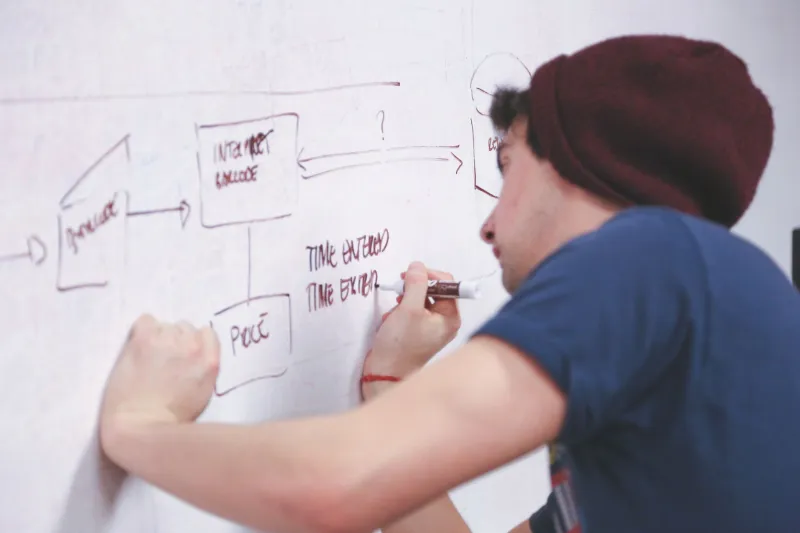
Scope creep doesn't show up all at once — it sneaks in one 'while we're at it' at a time. The Three-Function Rule is a dead-simple discipline that forces your team to define done at the smallest possible unit, so features ship instead of sprawl.

Read the story →

Latest Articles

Running in Parallel: The Case for Keeping Multiple Code Versions Live at Once 02
Developer Tools & Workflow

Running in Parallel: The Case for Keeping Multiple Code Versions Live at Once

Shipping a single version of critical code and hoping for the best is a gamble most teams can't afford. Intentionally running multiple implementations side by side—through feature flags, parallel paths, and staged rollouts—turns that gamble into a calculated, controlled experiment. Here's why your codebase might actually need more versions, not fewer.

Code Triage: A No-Nonsense Framework for Deciding What to Fix, What to Leave, and What to Nuke 03
Developer Tools & Workflow

Code Triage: A No-Nonsense Framework for Deciding What to Fix, What to Leave, and What to Nuke

Not every ugly piece of code deserves your attention — and not every clean-looking function deserves to survive. Here's a practical decision framework for developers who want to spend their refactoring energy where it actually counts.

Test Smart, Not Hard: Structuring Your Testing Strategy to Ship With Confidence 04
Developer Tools & Workflow

Test Smart, Not Hard: Structuring Your Testing Strategy to Ship With Confidence

Most teams either under-test and ship bugs, or over-test and ship nothing. The real answer lives in how you layer your tests — not how many you write. Here's how to build a testing strategy that keeps your pipeline fast and your production environment boring.

Why Constraints Are the Most Underrated Feature in Your Engineering Toolkit 05
Engineering Culture

Why Constraints Are the Most Underrated Feature in Your Engineering Toolkit

Unlimited time sounds like a dream, but it might be quietly killing your team's output. The psychology behind artificial deadlines reveals something counterintuitive: the tighter the box, the sharper the thinking. Here's why the best engineering teams aren't fighting constraints — they're designing them on purpose.

Burn It Down and Start Fresh: The Case for the Strategic Rewrite 06
Engineering Culture

Burn It Down and Start Fresh: The Case for the Strategic Rewrite

Patching legacy code forever sounds responsible — until you realize you're spending 80% of your sprint capacity keeping the lights on. Sometimes the bravest engineering decision is also the most pragmatic one: start over. Here's how to know when you've crossed that line.

Ship It and Watch It: How to Build Feedback Loops That Actually Keep Up With You 07
Developer Tools & Workflow

Ship It and Watch It: How to Build Feedback Loops That Actually Keep Up With You

Deploying with confidence isn't about deploying less — it's about seeing more. Modern observability tools can give your team the signal clarity to ship continuously and course-correct in real time, not after a postmortem. Here's how to build that system without drowning in noise.

Build Once, Rewrite Fearlessly: The Architecture Patterns That Keep You Shipping 08
Developer Tools & Workflow

Build Once, Rewrite Fearlessly: The Architecture Patterns That Keep You Shipping

Most rewrites kill momentum. The teams that avoid that trap aren't smarter — they've just built systems with seams in the right places. Here's how to architect your codebase so you can swap out engines without pulling over.

Debt Isn't a Four-Letter Word: How Smart Teams Budget for Technical Shortcuts 09
Engineering Culture

Debt Isn't a Four-Letter Word: How Smart Teams Budget for Technical Shortcuts

The most productive engineering teams aren't the ones with the cleanest codebases — they're the ones who treat technical debt like a financial instrument instead of a moral failing. Here's the framework that keeps velocity sustainable without letting shortcuts spiral out of control.

Stop Guessing, Start Measuring: A Developer's Guide to Building Smarter Feedback Loops 10
Developer Tools & Workflow

Stop Guessing, Start Measuring: A Developer's Guide to Building Smarter Feedback Loops

Shipping code is only half the job — the other half is knowing what happened after you did. This practical guide breaks down how to instrument your pipeline, track the metrics that actually matter, and turn what you learn in production into better decisions on your next build cycle.

Done Is Better Than Perfect: Why Shipping Messy Code Is Actually Good Engineering 11
Engineering Culture

Done Is Better Than Perfect: Why Shipping Messy Code Is Actually Good Engineering

The best engineers aren't the ones who write flawless code — they're the ones who ship, learn, and iterate faster than anyone else. We talked to engineering leads at startups and scaled companies to find out why imperfect code shipped today beats perfect code shipped never. Here's what they told us.