Language Whiplash: What Happens to Your Engineers When the Stack Never Stops Shifting

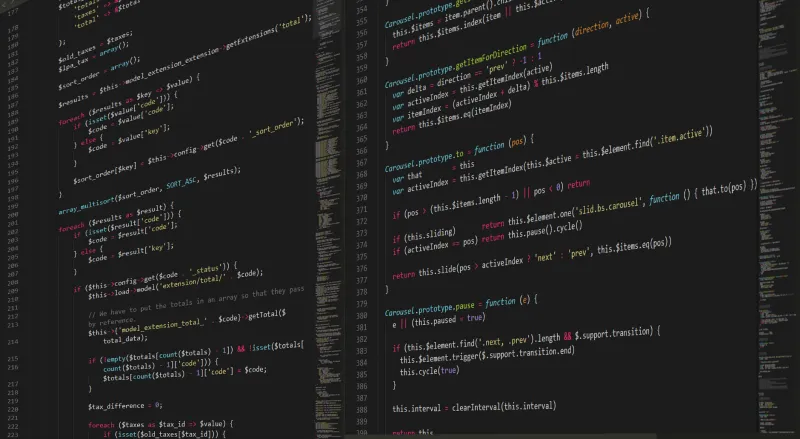
There's a certain pride that comes with being a polyglot developer. You can hop into a Go service in the morning, wrestle a React component into submission after lunch, and spend the last hour of your day debugging a Python data pipeline. On paper, that's an asset. In practice, it might be quietly wrecking your team.
Context-switching between programming languages isn't just a mild inconvenience — it's a real cognitive tax. And when your best engineers are paying that tax every single day, the compounding costs show up in the places you least want them to: slower output, subtle bugs, and eventually, a resignation letter.
The Mental Overhead Nobody Talks About
Here's the thing about switching languages: it's not just syntax. Every language carries its own mental model. Rust wants you thinking about ownership and lifetimes. JavaScript wants you comfortable with async weirdness and prototype chains. Python rewards a certain looseness that'll get you burned in a statically typed world. When you ask a developer to move between these paradigms multiple times a day, you're not just asking them to remember different keywords — you're asking their brain to reload an entirely different operating system.
Research on cognitive load suggests that deep, focused work requires a warm-up period. Some estimates put it at 20–30 minutes just to get back to full productivity after a significant context switch. Now multiply that by three or four language shifts in a workday. You're not getting eight hours of engineering output. You're getting something closer to four, padded by transition time that doesn't show up on any sprint board.
And the bugs that sneak through during those transitions? They're the worst kind — the ones that look right at a glance because your brain is still thinking in the last language you were using.
When the Stack Becomes a Trap
A lot of this starts innocently enough. A startup picks up a data science team that runs on Python. The frontend was always React. Someone built the auth service in Go because it was fast and they'd just read a blog post. Three years later, you've got five services in four languages and a team that's expected to be fluent in all of them.
This is the three-stack problem in its most common form: nobody planned for it, but here you are. And the engineers who are most capable — the ones with enough range to actually move between these systems — end up becoming the default owners of everything. They're the ones who get pulled in every direction, pinged on every incident, and asked to review PRs across every service.
That's not a reward for being good. That's a liability.
The Hidden Cost to Your Senior Engineers
Senior engineers are expensive, in the best way. You're paying for judgment, for pattern recognition, for the ability to make the right call quickly. But judgment requires context, and context requires depth. When you're spreading your senior folks across three different language ecosystems, you're diluting the very thing you hired them for.
There's also a retention angle here that's worth being blunt about. Engineers who feel like they're constantly scrambling — never quite expert enough in any one thing because they're always splitting focus — don't stick around. They leave for companies where they can go deep. They leave for places where their expertise compounds instead of spreads thin.
In a job market where senior engineering talent is still competitive, that's a real threat.
So What Do You Actually Do About It?
There are two honest paths here, and which one fits depends on your organization.
Path one: consolidate. This is the harder path, but it's the more permanent fix. It means doing an honest audit of your stack and asking which languages are genuinely earning their place. If two services could be rewritten in the same language without significant tradeoffs, that's work worth putting on the roadmap. Consolidation doesn't have to happen overnight — it can be a gradual migration strategy that reduces cognitive surface area over time.
This is also a conversation worth having with leadership in terms they care about. Frame it as engineering capacity, not language preference. Every unnecessary language in your stack is a tax on developer velocity. That framing lands differently than "we have too many languages."
Path two: build better boundaries. If consolidation isn't realistic — and for a lot of teams, it genuinely isn't — then the goal becomes minimizing unplanned context-switching rather than eliminating language diversity altogether.
That means organizing teams around services rather than features when possible, so individual engineers aren't required to be fluent across the whole stack. It means being intentional about who owns what, and protecting that ownership instead of defaulting to whoever can figure it out fastest. It means building runbooks, internal docs, and onboarding guides that reduce the ramp-up cost every time someone has to touch an unfamiliar codebase.
It also means being honest in your hiring. If you're a polyglot shop, say so. Don't recruit engineers with the promise of deep specialization and then surprise them with a context-switching marathon on week two.
The Team That Ships Consistently
The teams that ship consistently aren't necessarily the ones with the most language coverage. They're the ones with the least friction. They know their tools. They've built intuition in their stack. When something breaks at 2am, they're not spending the first twenty minutes remembering how that service's language handles error propagation.
That's not an argument against learning new languages or exploring new technology. Curiosity is part of what makes engineering culture worth being in. But there's a difference between exploring a new language on your own time or in a side project, and being required to be production-ready in four different languages as part of your day job.
One builds skills. The other builds burnout.
Build the Stack Your Team Can Actually Run
At the end of the day, your stack should serve your team — not the other way around. The most technically interesting architecture in the world isn't worth much if the people maintaining it are exhausted, making preventable mistakes, or quietly updating their LinkedIn profiles.
Take a look at what you're actually asking your engineers to hold in their heads. If the answer is "a lot," that's not a badge of honor. That's a problem worth solving before it solves itself in a way you won't like.