Your Pull Requests Are Aging Like Milk, Not Wine
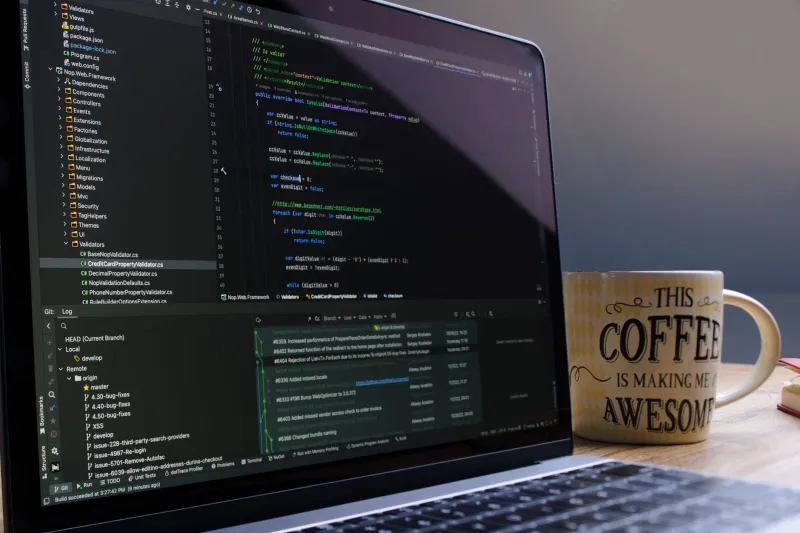
There's a particular kind of frustration that every developer knows. You finish a feature, write up a solid description, open the PR, and then... wait. You context-switch to something else. A day passes. Then two. By the time the first review comment lands, you've mentally moved on to three other things. Getting back into that code feels like returning from a two-week vacation.
This isn't a niche complaint. It's one of the most consistent sources of friction in software teams across the industry. And the worst part? Most teams have accepted it as just the way things are.
They shouldn't.
The Hidden Cost Nobody Talks About
Slow code review doesn't just delay merges. It compounds. A PR that sits for four days doesn't just add four days to your cycle time — it creates merge conflicts, stale context, and a developer who's already deep into the next ticket when the feedback finally arrives. Re-engaging with old code is expensive. Context switching has a real cognitive cost, and every hour a PR ages is an hour of future re-onboarding you're scheduling without realizing it.
Data from the DORA (DevOps Research and Assessment) reports consistently shows that elite-performing engineering teams have dramatically shorter change lead times than their peers. A meaningful chunk of that gap comes down to review turnaround. Teams that treat code review as a same-day or next-day activity ship faster, accumulate less WIP, and — counterintuitively — tend to have fewer integration bugs, because changes are smaller and fresher when they get reviewed.
The three-day mark is roughly where things start to go sideways. PRs that haven't received a first review within 72 hours are statistically more likely to go stale, require rebase work, or get abandoned entirely. Sound familiar?
Why Reviews Slow Down in the First Place
Before you blame your teammates for being lazy reviewers, it's worth understanding the structural reasons review cycles balloon.
PRs are too big. This is the number one culprit. A 1,200-line diff touching eight files is not a pull request — it's a feature branch that got out of hand. Reviewers open it, feel overwhelmed, and mentally schedule it for "when I have a real block of time." That block of time never comes. Smaller PRs get reviewed faster, period.
There's no review SLA. Most teams have implicit norms around review turnaround, but nothing explicit. When expectations aren't defined, they default to "whenever." High-performing teams often set a simple rule: first response within one business day. Not full approval — just a first look and some signal.
Async communication isn't being used right. Remote and hybrid teams especially fall into the trap of waiting for synchronous moments to do review work. Great async-first teams treat review like a first-class workflow item, not something you squeeze in between meetings.
Reviewers feel like gatekeepers. When review culture becomes adversarial — where every PR needs to be perfect before it merges — reviewers unconsciously slow down to be thorough. That's not always the right instinct. Shipping imperfect code that works is often better than perfect code that's two weeks late.
What Faster Looks Like in Practice
Here's the thing: speed and quality aren't actually in opposition. They just require different habits.
Timebox your reviews. A 30-minute focused review is almost always more useful than a two-hour deep dive that happens three days later. Set a timer. Leave actionable comments. Move on. If a PR genuinely requires two hours to understand, that's a signal the PR is too large — not that you need more time.
Use draft PRs as a collaboration tool. Opening a draft PR early — before you're done — invites lightweight feedback before things are baked in. It's lower stakes for both sides, and it catches architectural issues before they become expensive to unwind.
Rotate reviewer assignments. When the same two senior engineers are on every review, you create a bottleneck that scales with their availability. Spreading review responsibility across the team builds shared code ownership and keeps the queue from depending on any one person's calendar.
Separate blocking from non-blocking feedback. Not every comment needs to hold up a merge. Plenty of review feedback is "nice to have" or "consider this next time" — but when it's presented the same way as a genuine blocker, it creates unnecessary back-and-forth. Adopt a convention (many teams use prefixes like nit: or suggestion:) to distinguish what actually needs to be addressed before merging.
Automate the obvious stuff. Linting, formatting, test coverage thresholds — none of this should land in human review. If your reviewers are spending time on style issues that a linter would catch, you're wasting their attention on things that don't require judgment. Offload the mechanical stuff to CI so reviewers can focus on logic, architecture, and edge cases.
The Cultural Piece
Process changes only go so far. The deeper issue is how teams think about code review culturally.
In a lot of engineering orgs, review is treated as a checkpoint — a tollbooth where code has to prove itself worthy before it's allowed through. That framing creates adversarial dynamics and encourages reviewers to find problems rather than help ship things.
The teams that do this well tend to treat review differently: as a collaboration, not a gatekeeping exercise. The goal isn't to catch every possible issue before merge — it's to make sure the change is good enough to ship safely, and to share knowledge along the way. That's a subtle but important shift.
It also means being honest about what "good enough" actually means. Perfect is not a shipping requirement. Code that solves the problem, passes tests, doesn't introduce obvious regressions, and can be understood by the next person who reads it — that's mergeable. Everything else is refinement you can do in a follow-up.
Three Days Is a Ceiling, Not a Target
If your team's average PR review time is hovering around three to five days, you're not in catastrophic shape — but you're leaving real velocity on the table. The goal isn't to rush reviews or sacrifice quality for the sake of hitting a metric. It's to build a culture and a process where good code moves through the pipeline without unnecessary friction.
Start by measuring where you actually are. Pull your average review turnaround from GitHub, GitLab, or whatever you're using. Look at your PR size distribution. See how many PRs are going more than 72 hours without a first comment. The data will tell you where the bottleneck lives.
Then pick one thing to change. Smaller PRs, a review SLA, better async habits — any of these will move the needle. You don't have to overhaul everything at once.
Build. Ship. Repeat. The whole loop depends on keeping things moving.